To the Future is a small GRAPH interview of junior actresses. This one was published in the December 2012 issue.
Continue readingTo the Future – Kishou Kazuto, Star Troupe
Reply
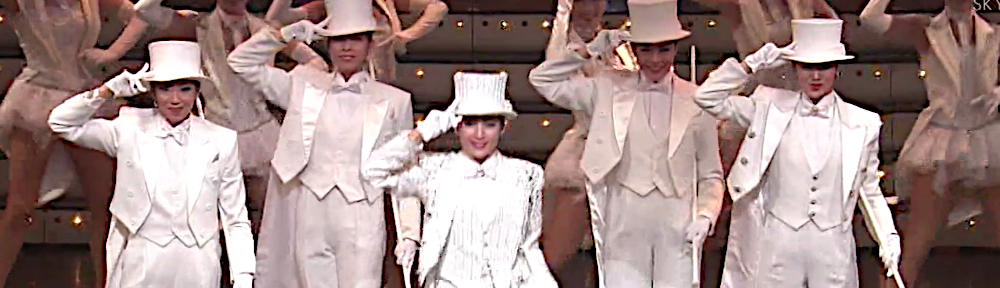
To the Future is a small GRAPH interview of junior actresses. This one was published in the December 2012 issue.
Continue readingSPOTLIGHT was a 2018 feature where Top Stars talked about roles that were major turning points for them, as well as their routines behind the scenes. Kurenai’s was published in the December issue.
Some outtake shots from the back of the magazine are included.
Continue readingThis cute comparison Q&A was published in the March 1993 issue of GRAPH. It features 3 of the Top Musumeyaku of the time: Asano Kayo (Moon Troupe), Morina Miharu (Flower Troupe), and Shiraki Ayaka (Star Troupe), classmates who were known as the ‘Young Trio’ after they all ascended to Top Musumeyaku positions very close together.
Continue readingThis interview featuring Moon Troupe’s top couple, Sena Jun and Ayano Kanami, was published in the February 2008 issue of GRAPH.
Some outtake photos from the back of the magazine are included.
Continue readingThis book, which is something of an ‘oral history’ of Takarazuka’s Rose of Versailles adaptations, was published by Ascom in late 2005, and features chronological accounts from otokoyaku who had performed in the franchise from its first origins through the 2001 productions. Since the book is derived from transcriptions of interviews taking place often many decades after the fact, there may be discrepancies between accounts.
Please note that the term appearing through the text as ‘theatre-comic’ is translated from the Japanese term gekiga [劇画]. Although this term is described as applying to mainly male-oriented comics in most English-language sources, this not accurate. The definition of this word changed to also include sweeping, romantic female-oriented works with Rose of Versailles being arguably the most famous of theatre-comics. Takarazuka even published its own magazine of theatre-comics in the 1970s.
Chapters have been split in two to make them more readable without too much scrolling to reach the explanatory footnotes. Some paragraph breaks have also been added for ease of reading in English. I have also included some images printed in the book as well as sourcing many other archival images to illustrate the text.
Installments will be posted every two weeks, with some breaks if the next chapter is not complete.
Continue readingRANDOM was a Q&A/variety feature for young otokoyaku that ran in GRAPH in 2021. Amahana’s was published in the August issue.
Continue readingTalk DX is a long-running GRAPH talk feature where Top Stars and their main otokoyaku co-stars discuss their current Grand Theatre performance before the shift to Tokyo. The El Halcon/Revue Orchis talk was published in the February 2008 issue.
Some outtake photos from the back of the magazine are included.
(Please note the translator has not seen Revue Orchis.)
Continue readingThis book, which is something of an ‘oral history’ of Takarazuka’s Rose of Versailles adaptations, was published by Ascom in late 2005, and features chronological accounts from otokoyaku who had performed in the franchise from its first origins through the 2001 productions. Since the book is derived from transcriptions of interviews taking place often many decades after the fact, there may be discrepancies between accounts.
Please note that the term appearing through the text as ‘theatre-comic’ is translated from the Japanese term gekiga [劇画]. Although this term is described as applying to mainly male-oriented comics in most English-language sources, this not accurate. The definition of this word changed to also include sweeping, romantic female-oriented works with Rose of Versailles being arguably the most famous of theatre-comics. Takarazuka even published its own magazine of theatre-comics in the 1970s.
Chapters have been split in two to make them more readable without too much scrolling to reach the explanatory footnotes. Some paragraph breaks have also been added for ease of reading in English. I have also included some images printed in the book as well as sourcing many other archival images to illustrate the text.
Installments will be posted every two weeks, with some breaks if the next chapter is not complete.
(Please note some images used in this chapter are from photographs rather than scans; I hope to replace these with better quality scanned versions later.)
Continue readingThis Kageki feature brings brief updates on the lives of Takarasiennes. This issue features Yumena Rune, Asazuki Kiwa, Hiryuu Tsukasa, and Kazeiro Hyuuga.
Continue readingAshizawa Jin is an illustrator/columnist who seems to have worked for GRAPH since the 1960s (yes, you read that right). His interview column gets a new title every year but usually the format is fairly similar. The 2019 column, which featured musumeyaku only, was called The Lovely Flowers Bloom. This interview with Ousaki Ayaka was published in the March issue.
Continue reading