This feature about the care and keeping of Miya Rurika was published in the August 2017 issue of Kageki. I have also included outtake excerpts published in the back of the magazine.
Continue readingMiya Rurika’s Breaktime My Way
Reply
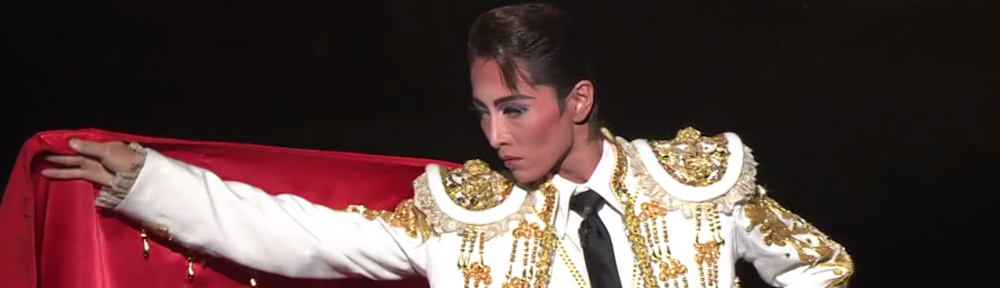
This feature about the care and keeping of Miya Rurika was published in the August 2017 issue of Kageki. I have also included outtake excerpts published in the back of the magazine.
Continue readingThis interview, published in the December 1992 Kageki, features the four Top Stars of the time (Shion Yuu, Mori Keaki, Anju Mira, and Suzukaze Mayo) reminiscing about their experiences in the Takarazuka Grand Theatre before it was entirely rebuilt. There’s a lot of details about their early careers and time as fans themselves before entering the company.
Continue readingIn this feature from Kageki, several siennes talk about skills they have that they don’t get to show off on stage. This issue features Tooma Kazuki, Ooki Makoto, Aizuki Hikaru, and Kanoha Toki.
Continue readingThis interview with Makaze Suzuho about her West Side Story debut was published in Sankei West on January 11. The original article and accompanying photos can be found here. (Archive link here, page 2, page 3.)
Continue readingThis article based on an interview with Serika Toa that took place during the run of West Side Story was published on January 12. The original article, written by Hashimoto Nami, as well as some photos, can be found here. (Archive link here.) Please give the original publishers some traffic~
Serika Toa’s transfer – ‘no worries’ about Makaze Suzuho’s debut performance, ‘hates losing’ so much she fainted trying to swim after an older boy
Takarazuka Revue otokoyaku star Serika Toa, who transferred from Flower Troupe to Cosmos Troupe, is currently appearing in new Cosmos Troupe Top Star Makaze Suzuho’s debut show West Side Story (playing until the 25th in Tokyo International Forum Hall C, Marunouchi, Tokyo). ‘While I was surprised at a transfer after so many years, I don’t have any concerns. Right now, we’re all aiming towards the same goal,’ Serika said with a smile.
West Side Story is a Broadway musical that was later adapted into a film. Serika plays the older brother of Maria, the heroine: Bernardo, the leader of the ‘Sharks’, a gang of Puerto Rican-American delinquents. He is the enemy of the protagonist. ‘I was basically really happy to get this role. I love complex characters.’
George Chakiris, who played Bernardo in the film, won the Academy Award for Best Supporting Actor with his performance. ‘After the role distribution was announced, a lot of people were saying ‘You got Chakiris’ part!’ He’s so cool, right?’ While the storyline of the musical is different from that of the film, regarding the visual aspects, Serika said ‘I want to have Bernardo’s ‘atmosphere’ – he’s really sexy and has such an emphatic presence that it seems he takes control of a space just by making an entrance.’
Serika has a relaxed way of speaking and a calm air about her. From appearances, she doesn’t seem to have much in common with the character she plays. ‘That’s true, I suppose. While we share deep family bonds and a desire to protect them, and the way we value our friends, he’s very quick to start fights. I’d just end up thinking, wouldn’t it be better if we didn’t all have to fight?’ she joked.
Inside Bernardo’s anger swirls frustration at the discrimination he faces. ‘Although the circumstances may be completely different, everyone has feelings of frustration. I hope I can connect my own frustrated emotions with Bernardo’s.’
She often feels frustrated with herself. ‘I’m battling feelings of frustration even now. The dancing [in this show] is really hard for me.’ As the choreography in the show was originally created for male performers, it is considerably more difficult for women to perform at the original tempo.
‘I can really feel the strength difference in things like jumping ability and such. Every day we’re all giving everything we’ve got in the dancing in order to get even a little bit closer to what it should be like. I’ll probably be a lot more muscular by the time this show closes (laughs).’
Serika joined the company in Heisei 19. Originally assigned to Star Troupe, she was transferred to Flower Troupe in Heisei 24 and Cosmos Troupe last year. Makaze, the new Cosmos Troupe Top Star, is one year her senior, and they were formerly in Star Troupe together. ‘She’s a really magnanimous person, and since we were working hard in the same troupe for 5 and a half years of my foundational time as a junior actress, I feel very secure with her. If we get to talking together we just don’t stop.’ Having one of the members of her class she gets on best with in the same troupe – Aizuki Hikaru, who was ‘born and raised’ in Cosmos Troupe – is also reassuring to her.
She has accumulated a great amount of experience through her time in each troupe. While she was in Flower Troupe, the troupe changed to become much more youthful when Asumi Rio became Top Sar, and starting from Asumi’s second show Serika was supporting her closely. She can still remember clearly wearing feathers for the first time – how heavy they were and how frightening it was descending the Grand Stairs.
‘At first I was really worried about it, and pushed myself really hard to be more capable and to be able to support her better. But eventually I realized I can’t give more than I already am in the moment, and if I take on too much I won’t even be able to do that.’ She learned not to take everything on alone, but allow her comrades to help and build reliance on them. ‘I got more confidence once I let people support me. I recieved so much from them.’
Flower Troupe was the first troupe establisted in Takarazuka. ‘Everyone has a deep-rooted pride – often you wil hear people say ‘Since this is Flower Troupe, it has to be this way.’ It’s very important to keep in touch with the traditions.’
Cosmos Troupe is celebrating its 20th anniversary this year. Serika said she could feel the power of the youngest troupe. ‘It’s full of people without any hesitation, who will say right away ‘I’ll give it a shot’ about any new challenge. Nobody’s caught up in fixed notions of what we should adhere to, and the atmosphere of freedom is very invigorating.’
Analyzing her personality, Serika said that since she was little ‘I did everything at my own pace, and in a way I was very stubborn.’ She determined what she wanted to do entirely by herself, including her decision to join Takarazuka. Her parents never rejected any of her decisions. ‘Therefore I naturally developed a strong sense of responsibility. I’ll feel like I’d better get it done right.’
In her third year of elementary school, she learned to swim. She was determined not to be outswam by the boys and completely devoted herself to catching up to the older boy swimming briskly ahead of her, but… ‘I passed out. I’m too stubborn, I can’t stand losing,’ she laughed.
The word she would use to describe the last year is ‘transformation’. Not only did she transfer troupes, but her personal life changed significantly as well. Using the time she had before starting in her new troupe, she passed her driving test. Afterwards she bought a car and is enjoying driving. ‘When I’m driving I have my own space, which is nice. I can sing really loud.’ Now she can take part in activities over a much wider area. ‘My father, my brother, and I took turns driving all the way to near the Shimanto River in Kouchi Prefecture. It was really fun.’
At the same time, she has started keeping a dog. While her family has a chihuahua, Serika lost her heart to a female toy poodle she saw at a petshop. ‘I went home and struggled about it for a day, but in the end I decided we were destined for each other. I called her Candy.’ When playing with her dog, it seems she can get away from her celebrity persona. ‘She’s so swe~et (laughs). It’s really healing to be with her and it’s a great way to shift back into my private life.’
Her word for this year is ‘progress’. ‘I’m in a new troupe, with a new Top Star, so I’m looking forward to discovering what kind of progress is in store for me. I’ve got to do it on my own.’ Her prior experiences will surely allow her to advance confidently down a new path.
This article about Chapi’s retirement press conference was published by Sankei West on January 16, 2018. The original article and many photos can be found here. (Archive link here.)
Note that all the years given are in Japanese era reckoning.
Continue readingBackstage Journal is a short Kageki feature where very young cast members write anecdotes about what’s going on behind the scenes of the productions. They’re not very deep, being full of emojis and more like blog entries than articles, but they are a good way to get to know the newest actresses in each troupe, or to see what senior actresses got up to in their early days.
This one was written by Snow Troupe member Ayanagi Shou (of the 92nd class) during Otozuki Kei’s prodution of Romeo et Juliette, and published in the April 2011 issue.
Continue readingMonthly Question!! was the new Kageki Top Star feature for 2018, taking over from That’s RanKING! It’s somewhat similar to That’s RanKING! in that it asks the Top Stars what they think the others would do in a particular situation, but without the points competition element.
This month’s question: What would you do if you were in the middle of a really scary haunted house and suddenly noticed that the person you came in with was gone?
Continue readingIn That’s RanKING!, a multi-year Kageki Top Star Q&A feature, the Top Stars rank each other based on various questions. The 2017 version of the column has questions sent in by readers.
This month’s question: Who would be best at leading a boy or girl scout troop?
Continue readingThis discussion of Nanami Hiroki’s 2017 Bow Hall took place during rehearsals of the show and was published in the January 2017 issue of Kageki.
Blazing Wind: Strategist Takenaka Hanbei roundtable talk
Participants: Suzuki Kei (Director), Nanami Hiroki, Maaya Kiho
Suzuki: While I did want to make a show about the Warring States era, the reason I settled on Takenaka Hanbei as the topic was that, among all the Warring States generals I thought he was the one who most fit my image of Nanami Hiroki. Since this is Kai-chan’s (Nanami’s) first solo lead, I basically wanted to write something that suited her well; there’s not really any other reason.
Nanami: I really like Director Suzuki’s straightforward scripts, so I was very happy to work together with him this time. Besides that, I really feel like he’s helped me out at many critical turning points. He’s always looking after me (laughs).
Suzuki: You’re welcome (laughs). I feel that Hanbei, as a person, was someone who valued life, even in the violent world of the Warring States. This is expressed in his tactics; he tried to preserve the lifes of not only his allies but his enemies as well. Therefore, for this show I want to use the theme of ‘life’ to tell the story of Hanbei’s lifetime and within that show my image of Hanbei.
Nanami: When I read the script, it reminded me of a Taiga drama1, how you can feel the emotional conflict between different people, and it seemed like the feelings from the performers would change the way it can be seen from day to day; that would be really interesting to see, I thought. Also, since many different commanders from the Warring States period will be appearing, I think people will be really excited about that. And besides that, Hanbei’s way of life was just really cool.
Suzuki: Too cool…
Nanami: Not to mention the contemporary accounts say that he was really good looking. No matter how much I research about him, I can’t find any failings; if someone like him was here now I think he’d be super popular.
Suzuki, Maaya: (Laugh)
Suzuki: I think the fascinating part about writing something set in the Warring States period is that you have to fill in the details that do not remain in contemporary accounts with imagination. Therefore, since I can’t say everything about Hanbei is correct, I think Kai-chan’s sensitivity in creating her Hanbei is certainly correct. This isn’t restricted to Hanbei as things are the same for his wife, Ine; in fact, no documentation remains about her at all.
Nanami: But her grave is placed right next to Hanbei’s. Therefore I’m sure they must have been close.
Maaya: When I first read the script, I felt that Ine was a place where Hanbei’s heart could rest. Also, Hanbei was such a lovely person…What a wonderful husband Ine had! I thought. (laughs)
Suzuki, Nanami: (laugh)
Maaya: I think she must have prayed day after day for her husband’s safety. I don’t want to just have the feelings and lifestyle of women of those days in my head, but to fully feel those emotions during my performance.
Suzuki: I have a really strong image from scenes in dramas and movies where the wife of the castle’s lord would say ‘I will protect this castle!’ You see those kinds of scenes a lot. While Takenaka is seen as very strong, I thought that of course a military leader who is responsible for the lives of so many thousands of people would certainly also be battling his own concerns. Therefore, I thought that the wife of someone fighting on the battlefield must have enough strength of her own to support him, so I feel Ine must have been that kind of strong person.
Nanami: This is my first time to act with Kii-chan so much. But I knew about Kii-chan before we were in Star Troupe together.
Maaya: Once you were reading a book about dramatic theory that I’d left in the corridor of the theatre, right?
Nanami: Right. It was so interesting that I was wondering whose book it could be, and it turned out to be Kii-chan’s. Back then I thought you must really like acting. Therefore, when we ended up in the same troupe I wanted to perform together with you sometime. I’m very happy that I was given this opportunity to perform with you before you go to Snow Troupe.
Maaya: Since I’d recieve acting advice from Hiroki-san all the time, I also wanted to perform together with her and so I’m very happy about this. Also, she is my first husband in a play (laughs).
Nanami: Really (laughs).
Maaya: Since I’m so happy, I’m going to do my all to work together with Hiroki-san.
Suzuki: Yesterday was our first time rehearsing the songs; how was it?
Nanami: I love those kind of catchy Takarazuka songs that you can’t forget after hearing once, and make you hum all the way home from the theatre. I was dying to have something like that, and Yoshida, the composer, created something totally perfect for the show.
Maaya: Everyone started humming them right away yesterday, didn’t they.
Nanami: They did! The lyrics are so clear, so that when I sang ‘My Life’s Path’ I just started crying. I think it’s a really important song since it conveys the message to the audience. Kii-chan’s camellia song is also lovely.
Maaya: I sing about Hanbei in it, and it uses the flower language of the red camellia2.
Suzuki: I thought the idea of ‘modest virtues’ and such was perfect for Hanbei.
Maaya: The melody and lyrics are very straightfoward, and I thought I’d never get something else where they worked together so well. I also have the chance to sing a duet with Hiroki-san, and our voices fit together in what feels like perfect harmony.
Nanami: It does feel wonderful. While there are a lot of songs, of course, this show also has a lot of dance numbers and fight scenes.
Suzuki: Yes. I think the dance scene of otokoyaku wearing armor, and the stage combat scenes, will be really memorable.
Nanami: I think when fans see that otokoyaku scene they’ll be like ‘Aaaah!’
Maaya: I’m like ‘Aaaah!’ just thinking about it (laughs).
Suzuki: The armor and other costumes are certainly a highlight of the show. The helmet Kai-chan wears in the poster wouldn’t have been so large in reality, but we had it made based on a bust of Hanbei and other portrayals.
Nanami: When I did the photoshoot for the poster I felt like I was three times bigger (laughs). Since there are all sorts of armor pieces and such to put on, I’m worried about costume changes, but relying on the help of the dressing staff (laughs) I want to look great in the show.
Suzuki: So, in the end why don’t we talk about what we’re excited for. Maaya, you start.
Maaya: Since acting is something you can’t do alone, I am hoping that when I hear the lines from my acting partner I can clearly convey the emotions that well up in the moment. I’m really grateful that I’ve been allowed to play Hiroki-san’s partner in her lead show so I’ll do my best.
Nanami: Since I have the lead in this show I’m of course thinking about how people will see me, but more than that I want people to see Hanbei’s life. Therefore, I want to work hard so that the audience will feel ‘Hanbei is so cool’ rather than just me. Since this show has the message ‘the world I live in can change through my relationship with someone else’, I am hoping that if anyone sees the show while they’re feeling down, once the show ends they can think ‘I’ll do my best from tomorrow’; that’s the kind of show I want this to be.
Suzuki: Like when Kai-chan was talking about the theme songs, I feel it’s true that Takarazuka has traditions that have to be preserved, so this time I wanted to make something new while protecting those traditions. If I can link that up with writing a story about Japanese history that is also new that would be a success, I thought. Also, though I keep saying things like this, since this is Kai-chan’s lead show, if through playing Hanbei she can show people a new Nanami Hiroki I’d be very happy. That’s all I’m working towards.
1 – Taiga dramas are year-long historical dramas broadcast by NHK, often biographies focusing on specific historical figures. (In fact, there is one about Tenju Mitsuki’s character in Blazing Wind, Kuroda Kanbei.)
2 – Japan has its own flower language, called hanakotoba. According to this website, the red camellia is associated with ‘unassuming splendor’, ‘elegance without affectation’, and ‘modest virtues’. (The wikipedia article on hanakotoba does not appear to be reliable.)